Creators – Week 6

This week we added some pickups to our game, some signals (Godot’s term for messages or events) to indicate their creation or collection, and a game manager to keep track of everything.

Pickups

To create our pickups we created a new scene with an Area3D as the root node. An Area3D, in conjunction with a CollisionShape3D, allows us to define an area where bodies entering and exiting this area can be detected.

We paired this Area3D with a cylinder CollisionShape3D and a cylinder MeshInstance3D, both about the same height as our player ball.

We created a new StandardMaterial3D resource for our pickup and used the checker texture again, this time scaled to appear multiple times on the object, to give it some visual interest.

Signals

Signals are Godot’s way for nodes to tell other nodes when something’s happened. There are many built-in signals in the existing nodes and you can easily define others yourself.

To demonstrate, we created a new script attached to the root node of the pickup scene, and with this same node selected, we then went to the tab underneath the Inspector tab, a tab called Node.
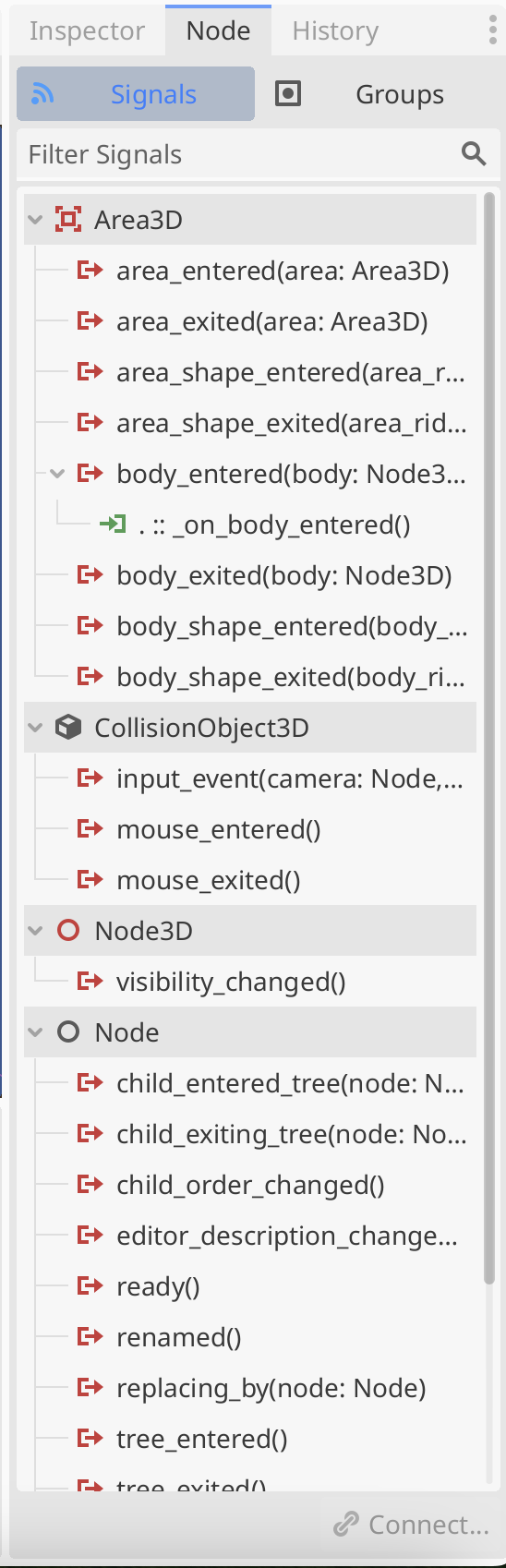
This shows the list of signals on this node available to connect to. We right clicked on body_entered() and connected it to the pickup script, creating a new function called _on_body_entered() in that script.

We just set the following code there to show that we’d detected something entering the area (as defined by the collider):

func _on_body_entered(body: Node3D) -> void:
	print(body.name + " entered the area")

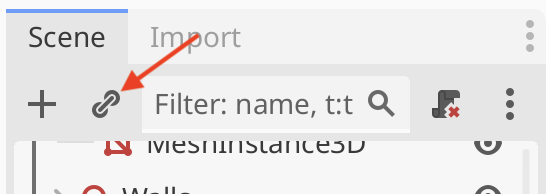
We created an instance of the pickup in our Main scene by using the “Instantiate Child Scene” button at the top of the scene view, and selecting the pickup scene:
We moved this pickup off centre and tested our code by playing it and rolling the player into the pickup. The message “Player entered the area” was printed to the Output window.

We updated this code by adding queue_free() at the end of the function:

func _on_body_entered(body: Node3D) -> void:
	print(body.name + " entered the area")
	queue_free()

This function means “please queue this node (and all it’s child nodes) for deletion at the end of this frame”. When we test again, we see that rolling the player into the pickup now makes the pickup disappear.

A Handy Way To Handle Events

In Godot connecting a node to another’s signal normally means that the first node has to have a reference to the second.

There’s a nice pattern that simplifies things. We make a central place that holds the signals, nodes that want to “emit” (or cause the signal to fire) and nodes that want to know when the signal was emitted just need to know about this central place, they don’t need to know about each other.

Godot has a system whereby a script can be set to autoload when the game starts, it doesn’t have to be connected to a node in a scene. Even more convenient, it will declare a global (visible everywhere) variable for this class instance that everyone can easily access.

This might sound complex, but it’s super easy in practice. We created a new script called events.gd. The contents were as follows:

extends Node

signal pickup_created
signal pickup_collected

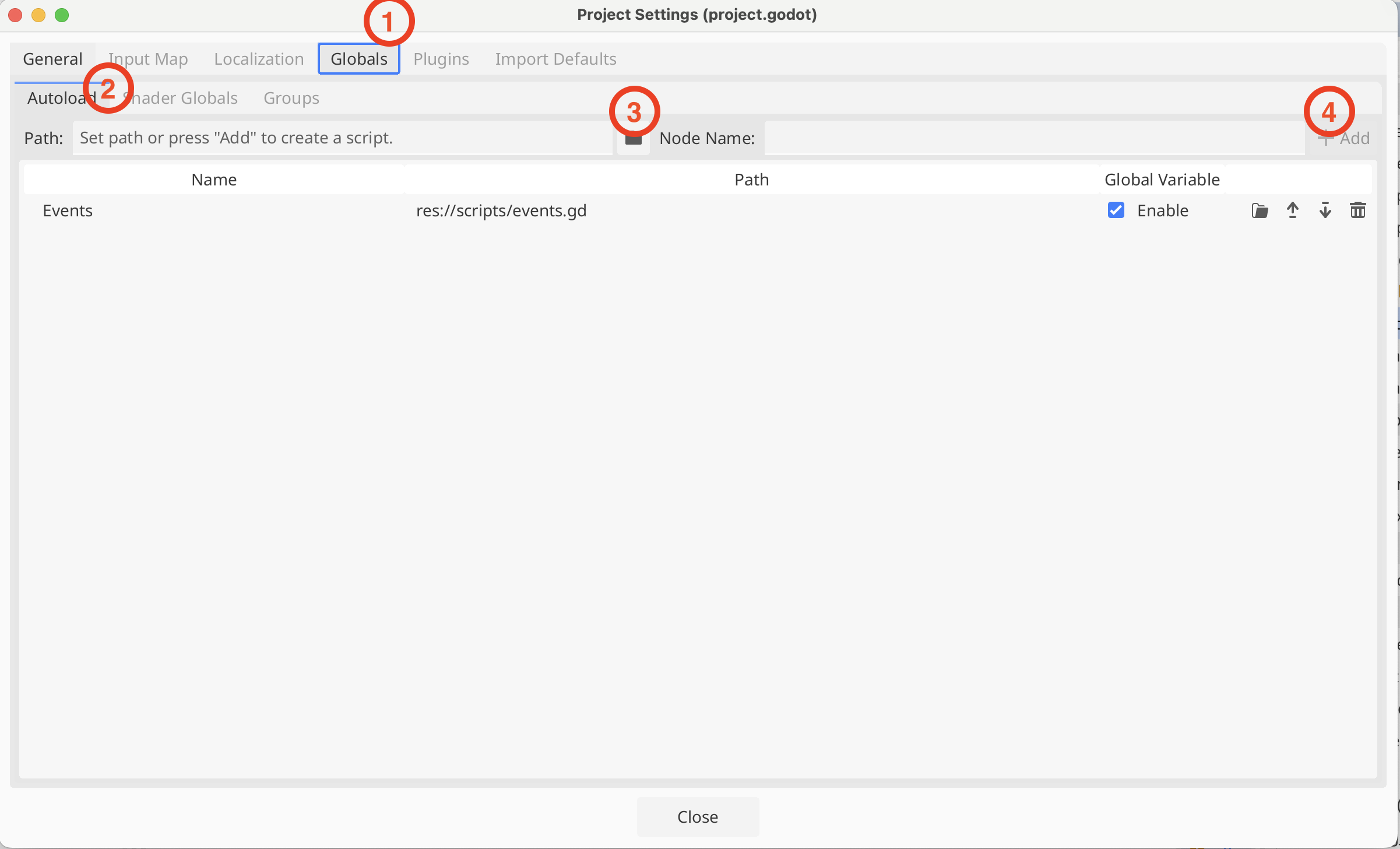
We then went to Project Settings | Globals and under Autoload, selected the events.gd script and pressed “+ Add”
Firing the Events from Pickup

In pickup.gd we added two lines to our _ready() and _on_body_entered() functions to cause the appropriate signals to be emitted when the pickup was created and collected respectively:

func _ready() -> void:
	Events.pickup_created.emit()

func _on_body_entered(body: Node3D) -> void:
	print(body.name + " entered the area")
	queue_free()
	Events.pickup_collected.emit()

See that we’re using the global variable “Events” here to access the signals.

We tested that we could read these signals by putting code into Player, but as this was just for quick testing, we won’t replicate it here.

Game Manager

We created a new Node3D in the Main scene, called it Game Manager, and created a new script attached to it.

In this script we added two variables to the top of the class:

extends Node3D

@export var pickup_count : int = 0
@export var game_time : float = 0

One is an integer variable to keep track of the number of pickups. The second is a float variable that tracks how long the game has been running for. Both have “@export” at the start, this means that they both appear as variables in the Inspector, which is handy.

For the pickup count, we first added two new functions, to respond to the creation and collection signals respectively:

func _on_pickup_created() -> void:
	pickup_count += 1
	
func _on_pickup_collected() -> void:
	pickup_count -= 1

All these to is increase or decrease the pickup_count variable. We need then to connect them to the signals, so that they get called if the signal is emitted. We do that in _ready():

func _ready() -> void:
	Events.pickup_created.connect(_on_pickup_created)
	Events.pickup_collected.connect(_on_pickup_collected)

For game_time, all we have to do is keep adding the delta values available in _process(), which represent the time in seconds since the last frame was drawn, together:

func _process(delta: float) -> void:
	game_time += delta

To see these running we ran our game and in the Scene view, switched to the “Remote” tree. The remote tree is the tree of the game that’s running. Looking at the Game Manager node in the inspector, we could verify the variables were working as expected.

Getting the Code

All our code for this year is be available on our GitHub.
Creators – Week 5

This week we continued working on Roll-A-Ball.

More Walls and Resource Copies

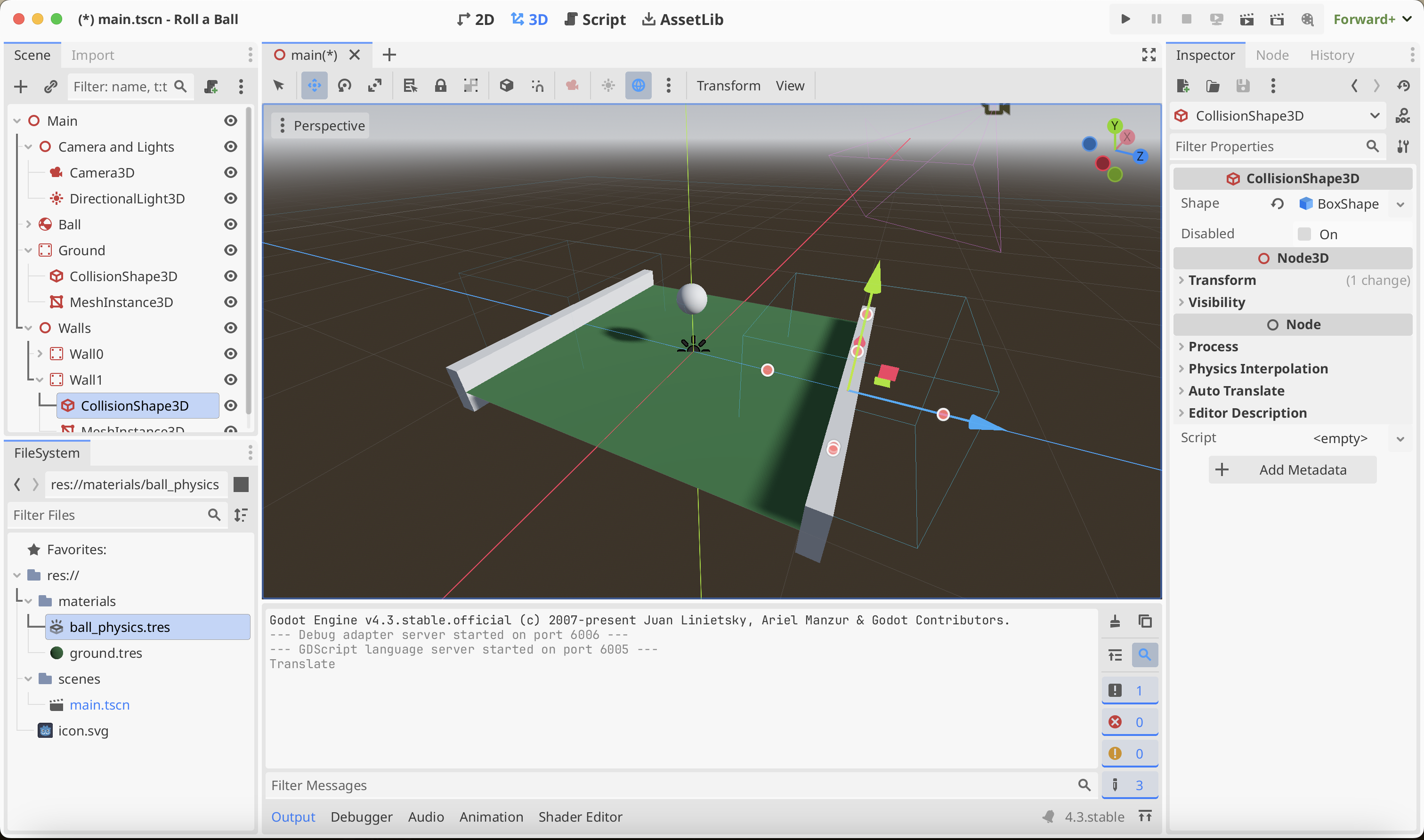
We left off last week with two walls. This week we copied one of those to create a third. It’s new transform position is (1.05, 0, 0) and it’s transform rotation is (0, 90, 0). That rotation represents 90 degrees around the vertical axis (y-axis).

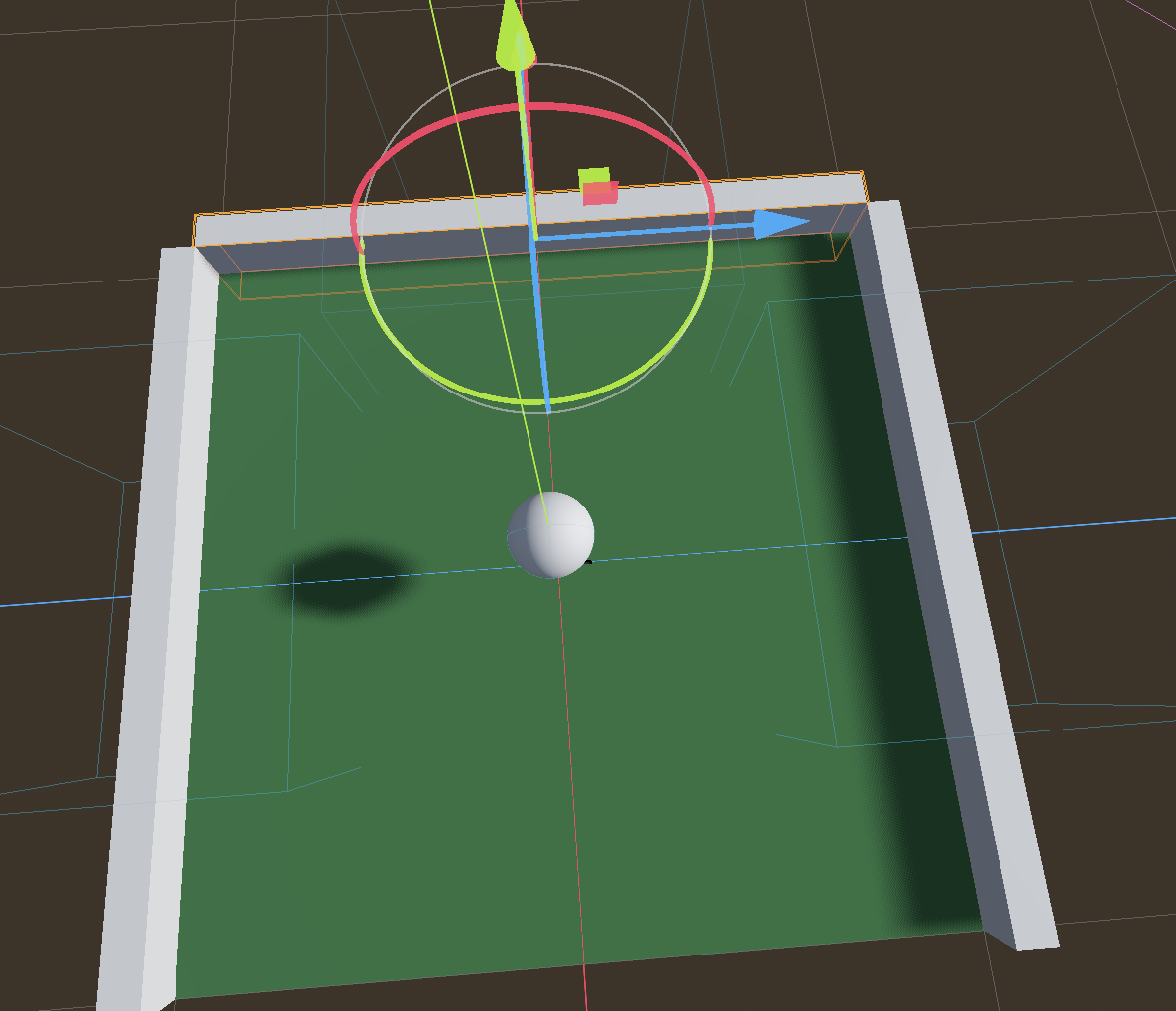
It was immediately clear that we ideally needed to close the gaps at the corners where the walls meet.

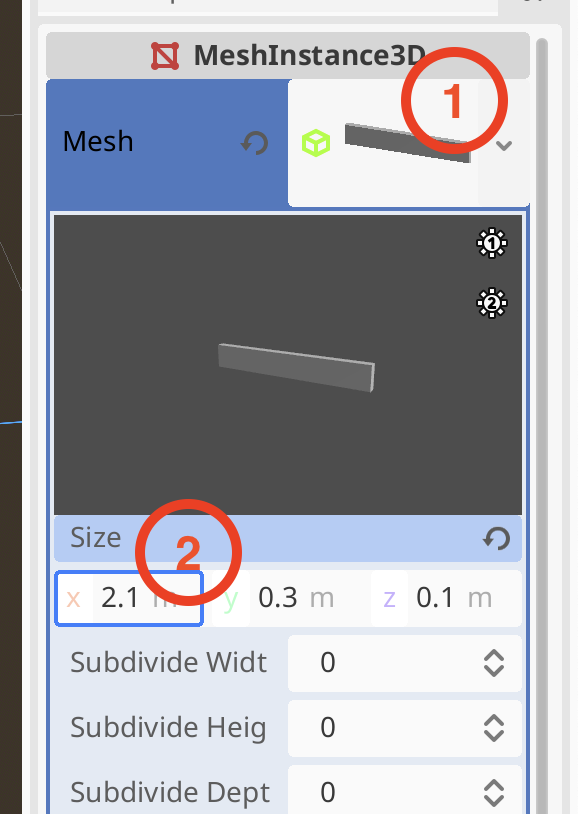
To adjust the size of the third node, we select its MeshInstance3d child node. To adjust the mesh size, we click on the picture of the mesh in the inspector to see it’s properties and then adjust the size to 2.1m:

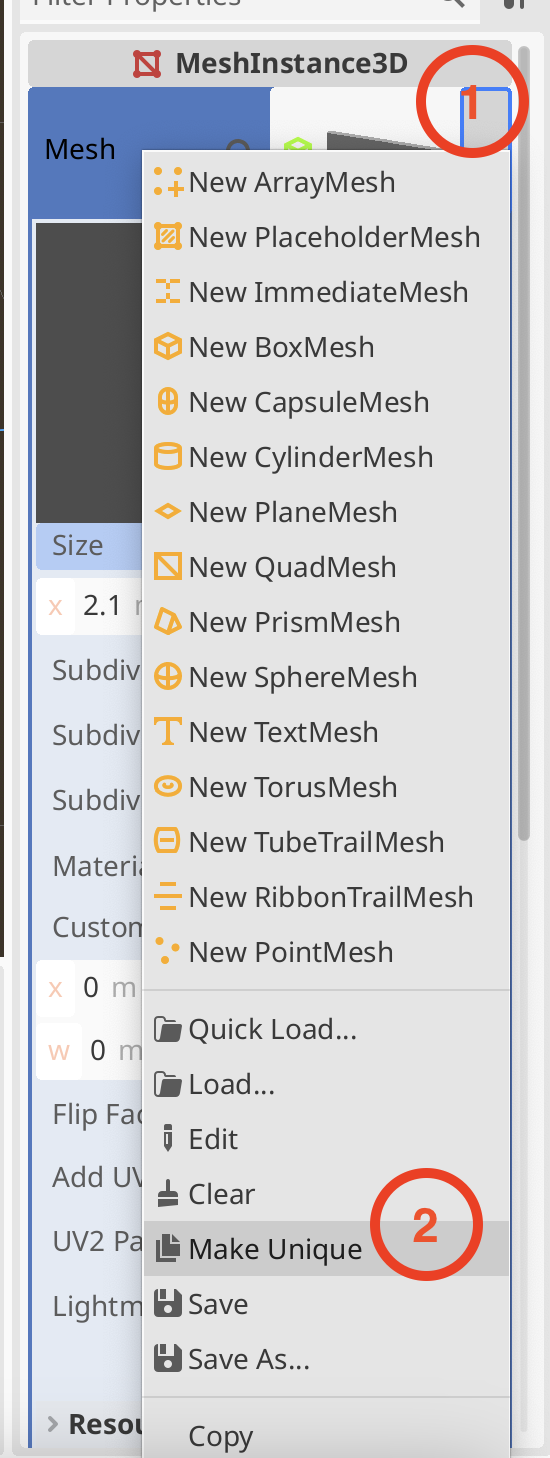
We can see all the walls change size. This is because they are all using the same mesh resource. We set the size back to (2.0, 0.3, 0.1) first. Now, we can make this mesh resource separate to the one used by the other two walls. Click on the drop-down arrow next to the mesh picture and then select “Make Unique”

Now when we change the size to (2.2, 0.3, 0.1) it doesn’t change the other two walls.

Finally we copy this third wall and move it to (-1.05, 0, 0). Now we have four walls.

Materials

We created a wall material in a very similar fashion to how we created the original ground material and assigned it to all four walls.

We also created a new material and assigned it to the ball. We gave it a strong red colour in ‘Albedo’. Because the ball was going to be impossible to tell if it was rolling, being all one uniform colour, we decided to apply a checker board texture to it. Here’s a texture we used today:

We placed this in a textures folder in the FileSystem and then assigned it to the Texture slot under ‘Albedo’ in the ball material. That gave the ball a checkered look.

We also looked at some of the other most commonly used material settings, including roughness, metallic and transparency.

Turning the Ball into the Player

We wanted to create a Player object and make it it’s own scene. We renamed “ball” in the Main scene to Player and right-clicked on and chose “Save branch as scene”. This created a new scene called “Player” which opened a new tab in the centre of the editor.

The Player node still had the transformation from the main scene (lifted up along the y-axis). We removed this and saved the Player scene. Switching back to Main we could see the Player node was now cutting through the ground so we moved it upwards again. Note that changes in the child scene were reflected in the parent scene, but not the other way around.

Creating an Input Map

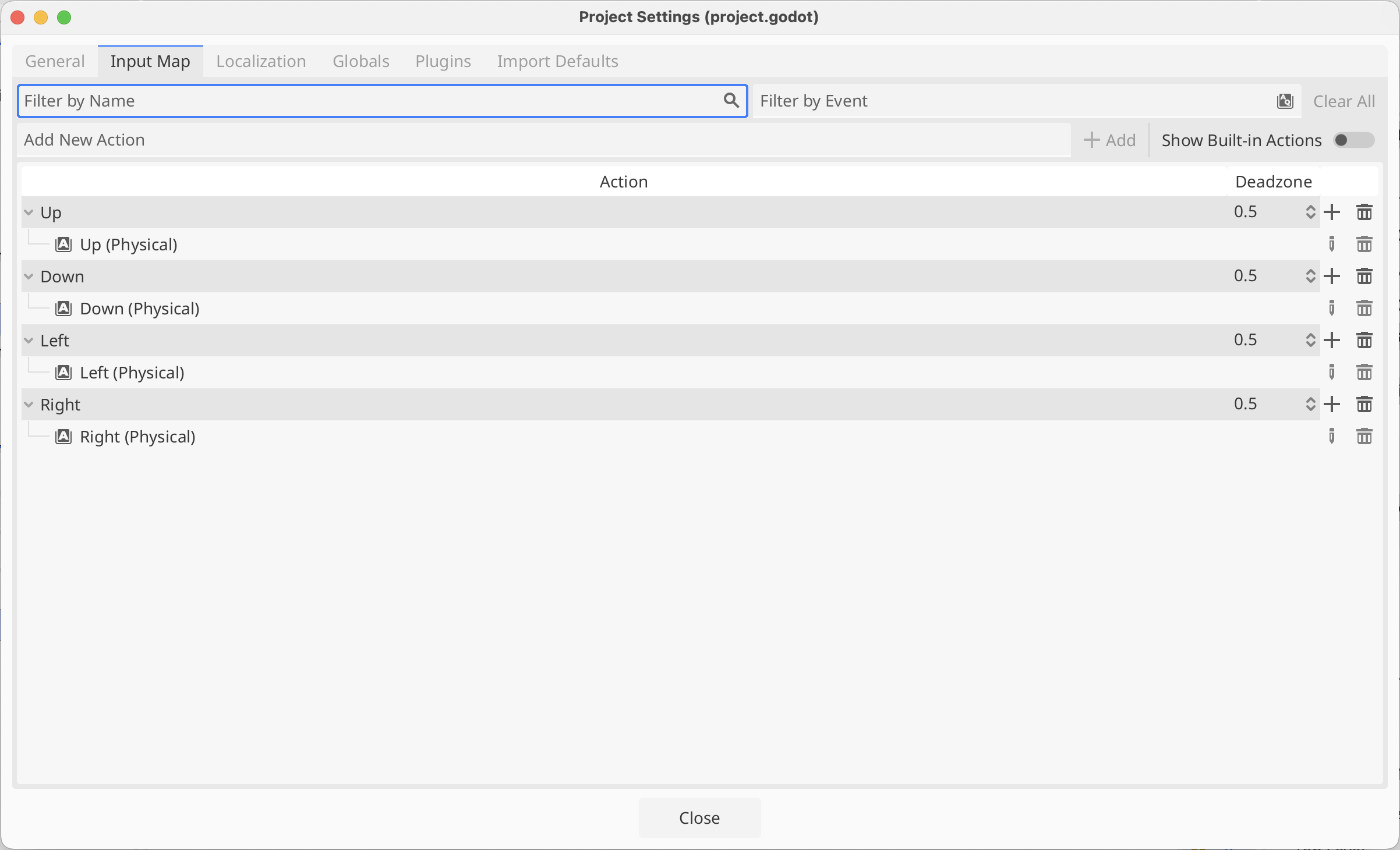
To capture user input, we set up some Input Actions. Under the Project menu, we selected Project Settings and then selected the Input Map tab:

Where it says “Add New Action” we typed the name of each action in turn (Up, Down, Left and Right) and pressed the Enter key or the “+ Add” button to create it.

We then selected each action in turn and pressed the + at the right hand side of it’s row. We then just pressed the key we wanted for that action and closed the dialog to confirm the selection. Above I’ve chosen the arrow keys, but others chose WASD. Either is fine.

Making the Player Move

We next want to make our player move in response to input.

First we created a scripts folder in our file system

In the Player scene, we selected the Player node and pressed the Attach Scripts button. We then change the path on the dialog that appeared to make sure to place our new script in the scripts folder (instead of the scenes folder).

Our script automatically opens in the editor. It extends RigidBody3D, which is the type of the existing Player node. It has two empty functions, _ready() and _process(), by default. _ready() is called when the object is first created and _process() is called every time the scene is drawn.

We’d like to apply physical forces to our object, specifically torque, which is a turning force. There is another function where we should put code that interacts with the physics system: _physics_process(). Here’s what that empty function should like:

func _physics_process(delta : float) -> void:
      pass

This is a function that takes one parameter called “delta” which is a float. A float is a number with a decimal point. The “-> void” means that this functions doesn’t send back a value to the code that calls it. You must have at least one line inside a function in GDScript; “pass” doesn’t do anything, it’s just there to prevent the function from having no lines in it.

We can get our input values like this:

func _physics_process(delta : float) -> void:
	var input = Input.get_vector("Up", "Down", "Left", "Right")

These are the names of the input actions we’ve already defined. This is going to return a Vector2 value which we’re storing in the variable called “input”. As a Vector2, this has an x and a y value. The x value will vary between 1, -1 and 0 depending on whether “Up” or “Down” or neither are being pressed. Similarly the y value will vary between 1, -1 and 0 depending on whether “Left” or “Right” or neither are being pressed.

We can now actually apply torque (turning force) to our ball:

func _physics_process(delta : float) -> void:
	var input = Input.get_vector("Up", "Down", "Left", "Right")
	apply_torque(Vector3(input.x, 0, -input.y))

The function apply_torque() is part of RigidBody3D and expects a Vector3 which indicates how much to apply around the x, y and z axes respectively. We don’t want any applied around the y-axis as this would just spin the ball around the vertical axis and not roll it along he ground. So we make a Vector3 where the “Up”/”Down” actions add torque around the X-axis and the “Left”/”Right” actions add torque around the z-axis. When testing, because of our camera angles, we find the “Left”/”Right” is backwards to what we want, so we use – to flip the direction.

The ball now rolls! Too fast and there’s a problem with colliders, which we need to fix – the wall colliers are the wrong size, but once that’s corrected we have something not too bad.

Getting the Code

All our code for this year is be available on our GitHub. Please see Creators – Week 4 for more details.
Creators – Week 4

This week we started our first Godot game. We downloaded the engine from the Godot website: https://www.godotengine.org

To install Godot on Windows, you just need to download the ZIP file and extract the two files inside to a folder on your computer. Double-click on the larger of the two to open Godot. Once run, you can pin the program icon to the taskbar to easily run it again.

Godot opens with the Project List. Here we see projects we’ve already created and can create new ones. We made a new project called “Roll a Ball”.

We found some machines had trouble with opening the project if the rendering mode was set to “Forward+”. For those people we found switching it to “Compatibility” fixed that issue. It seems that the underlying issue here is support for the Vulkan graphics API in the “Forward+” rendered. Switching back to “Compatability” uses the OpenGL API instead, which is more widely supported. Vulkan is intended as the successor to OpenGL.

Godot Scenes, Nodes and Resources

Scenes

The key building blocks of Godot are Nodes. Scenes are nothing more than a collection of nodes.

Each scene has a single node at the very top of the list. It can have nodes below it that are known as its children. Each of those child nodes can themselves have children. We call this structure a “tree” because of how it branches from a “root” – notwithstanding that the tree is upside down with the root at the top!

Nodes

There are lots of different types of Nodes and they all have specialised jobs to do. Most nodes “extend” other simpler node types, meaning that they do everything that the simpler node does, plus a bit more. For examples, the XRCamera3D, which is a camera used for VR and AR development looks like this:

Node -> Node3D -> Camera3D -> XRCamera3D

So an XRCamera3D is a specialised version of a Camera3D, which is a specialised version of a Node3D which is a specialised version of a Node.

Later, when we’re writing our own scripts, we’ll also effectively be extending existing nodes and adding our functionality on top of their existing functionality.

Resources

Resources are not nodes, but they are used by nodes. They provide extra information that Nodes need. Examples are meshes (3D shapes) and materials (which define the finish of 3D shapes).

Resources can often be created directly attached to the Node that needs them, but they can also be created as a file within the project. Having them as a file is good when you want to share the resource with several nodes and quickly find it later to edit it.

Godot Editor Layout

Unlike some other game engines, Godot has a fairly fixed layout. With reference to the image above, we will take a look at the most important parts.

The upper left is the Scene view, this is where we see the tree of nodes in the current scene.

Below the Scene view is the File System view. This shows the files in the current project. We can easily create folders here, rename and reorganise things. We can also create resources.

In the upper centre of the program is the main editor area. Using the buttons above it, it can be switched between 2D, 3D Script and Asset Lib views.

On the right hand side is the Inspector. This shows all the properties of the currently selected node or resource and allows us to edit them.

Building our Scene

We created a scene with a plane and a ball, both as physics objects. We dropped the ball and watched it bounce on the plane.

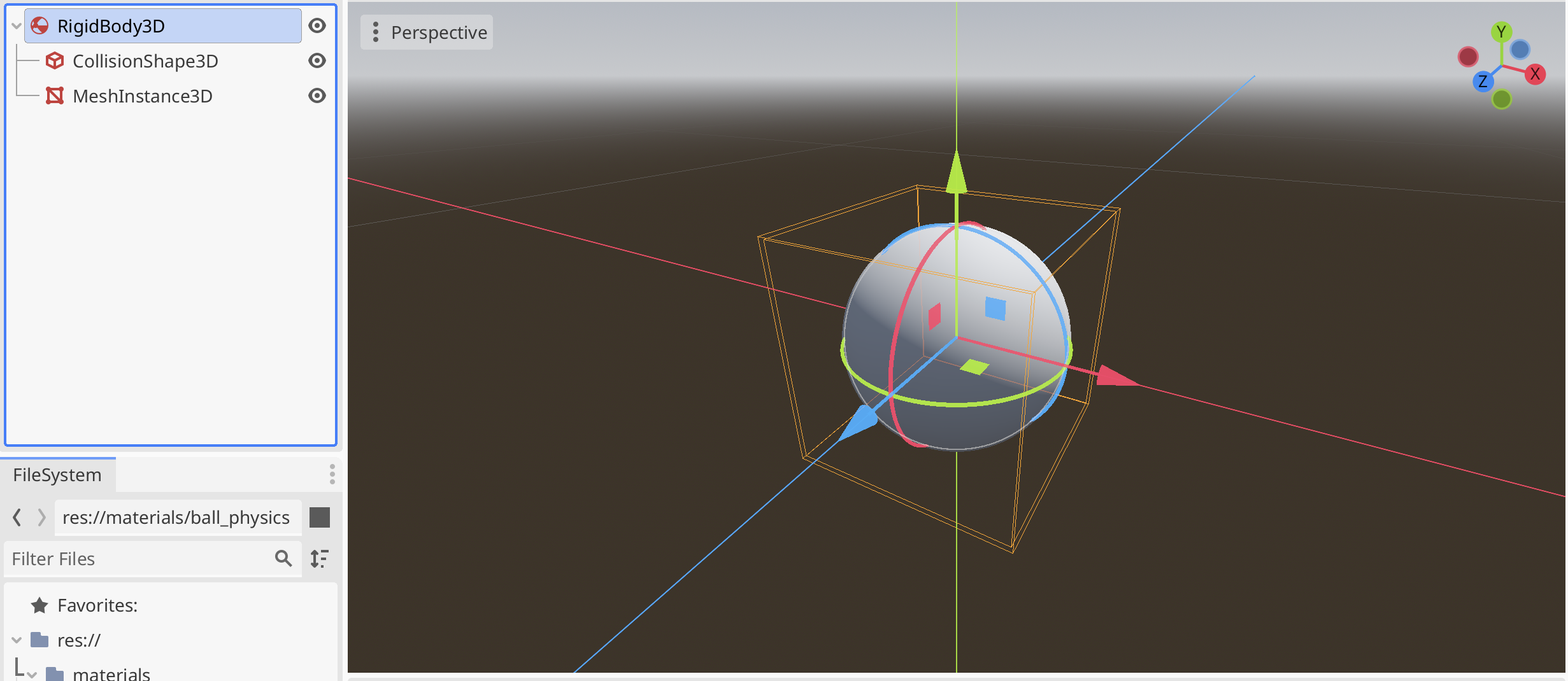
Both objects were build similarly, but the root node in each was slightly different. Let’s look at the ball first:

A RigidBody3D is a node that the physics engine will take care of moving. On it’s own, however, it can’t do anything. It needs to know what shape it’s simulating. As humans we also need to be able to see it. We accomplish this with two child nodes, The CollisionShape3D (containing a SphereShape2D resource) defines the shape, from a collision viewpoint, so the RigidBody3D can now do it’s work. So we can see something, a MeshInstance3D (containing a SphereMesh) is added to give us something we can see.

If might seem odd that we have to specify one shape for collision and one for visual purposes, but actually that really makes sense. Calculating physics and collisions is expensive (in terms of computer time). It’s really normal to use as simple a collision shape as we can. If this mesh was actually an irregular boulder, rather than a perfect sphere, we might still be able to get away with a simple collision shape, if it was close enough.

The ground was built like this:

Very similar, but instead of RigidBody3D, we have StaticBody3D. StaticBody3D is also managed by the physics engine, but it never moves. Like RigidBody3D it needs a collision shape, and again we need something we can see. For that we have a CollisionShape3D node (with a WorldBoundaryShape3D resource) and a MeshInstance3D (with a PlaneMesh resource). WorldBoundaryShape3D is interesting because it’s infinite in size. Even though our visible plane is only 2x2m, the ball will never fall off the side. This will not matter because we’ll be adding walls around our ground.

Running our Scene

Before we can meaning fully run our scene, we have to add a light and camera to it. We added two nodes, one a Camera3D and the other a DirectionalLight3D and positioned them appropriately. To run the scene, you just need to press the play button on the upper right-side and the game opens in a new window.

Getting the Code

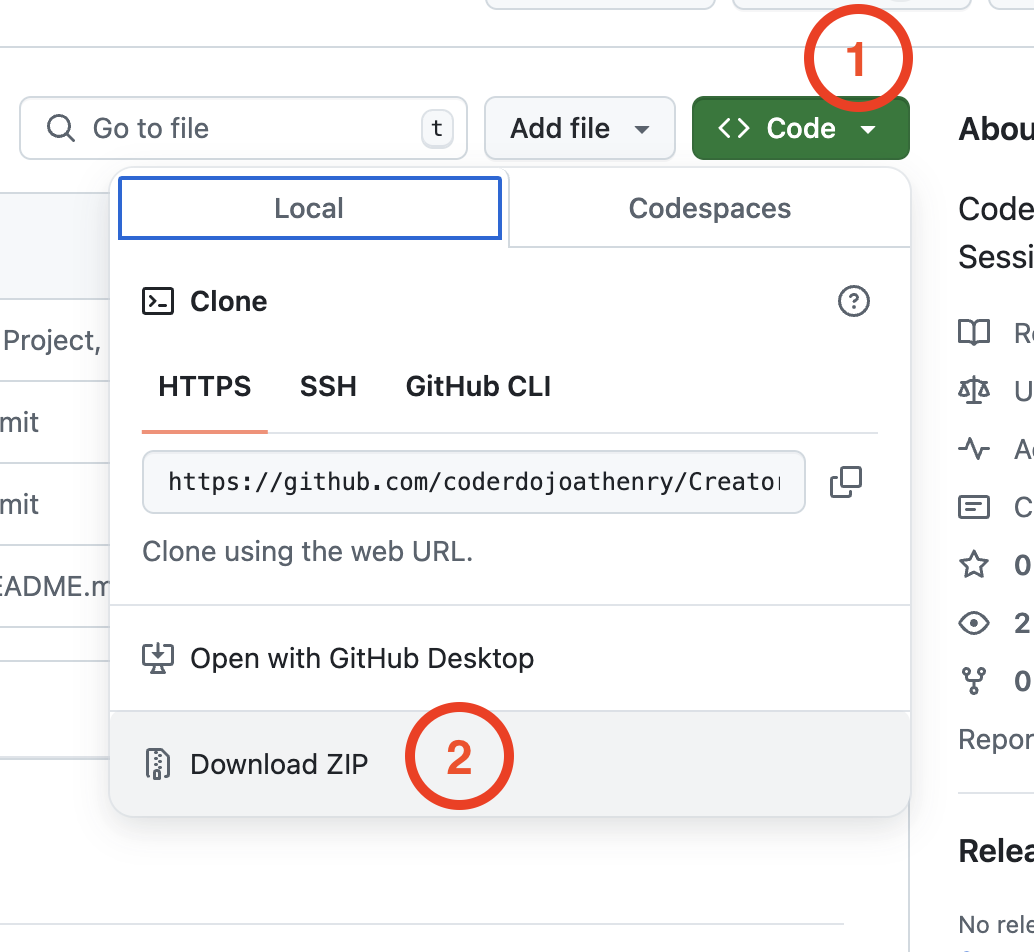
All our code for this year will be available on our GitHub. This will contain all code we write this year. At any point, use the green button on that page to download a ZIP file containing all the up-to-date code:

In Godot, just use the “Import” button from the Project List to load a project that’s not already listed.